
时间来到2026年,AI绘图工具早已突破了“肢体崩坏”和“五官乱飞”的初级阶段。现在的模型,都能轻易生成照片级的皮肤纹理和完美的人体结构。但即便如此,为什么我们一眼就能识别出某些画面是AI生成的?
那种挥之不去的“塑料感”和“拼贴感”,往往不再源于人物主体,而是源于环境。
在很多创作者的潜意识里,环境只是背景板,是为了衬托角色的“绿叶”。但在真实的摄影与电影逻辑中,环境决定了画面的空间感,也侧面反映了世界的物理法则。一个没有逻辑、缺乏层次的环境,就像是在真空里贴了一张墙纸,无论人物多么精致,都无法让人信服。
本教程将基于最新的AI生成逻辑,深入拆解三个核心方法,教你如何通过环境控制,彻底重塑AI画面的真实感。
方法一:拒绝“概括式”描述,构建空间层次
1. AI理解环境的误区
大多数人在编写环境提示词时,习惯用一个整体的名词去概括。例如输入:“一个繁华的街道”或“一片森林”。
在AI模型理解中,这种“标签式写法”会导致严重的信息丢失。当模型接收到单一环境标签时,它会倾向于调用训练集中最泛化的数据——即一张平面的、焦段模糊的“背景布”。它会将人物“贴”在这个背景前,导致人物边缘与环境光影割裂,缺乏景深互动。
2. 正确做法:拆解空间
要打破这种平面感,必须学会像摄影师一样思考,将空间拆解为前景(Foreground)、中景(Midground)、远景(Background)。你需要明确告诉AI,“画面是如何被看到的”。
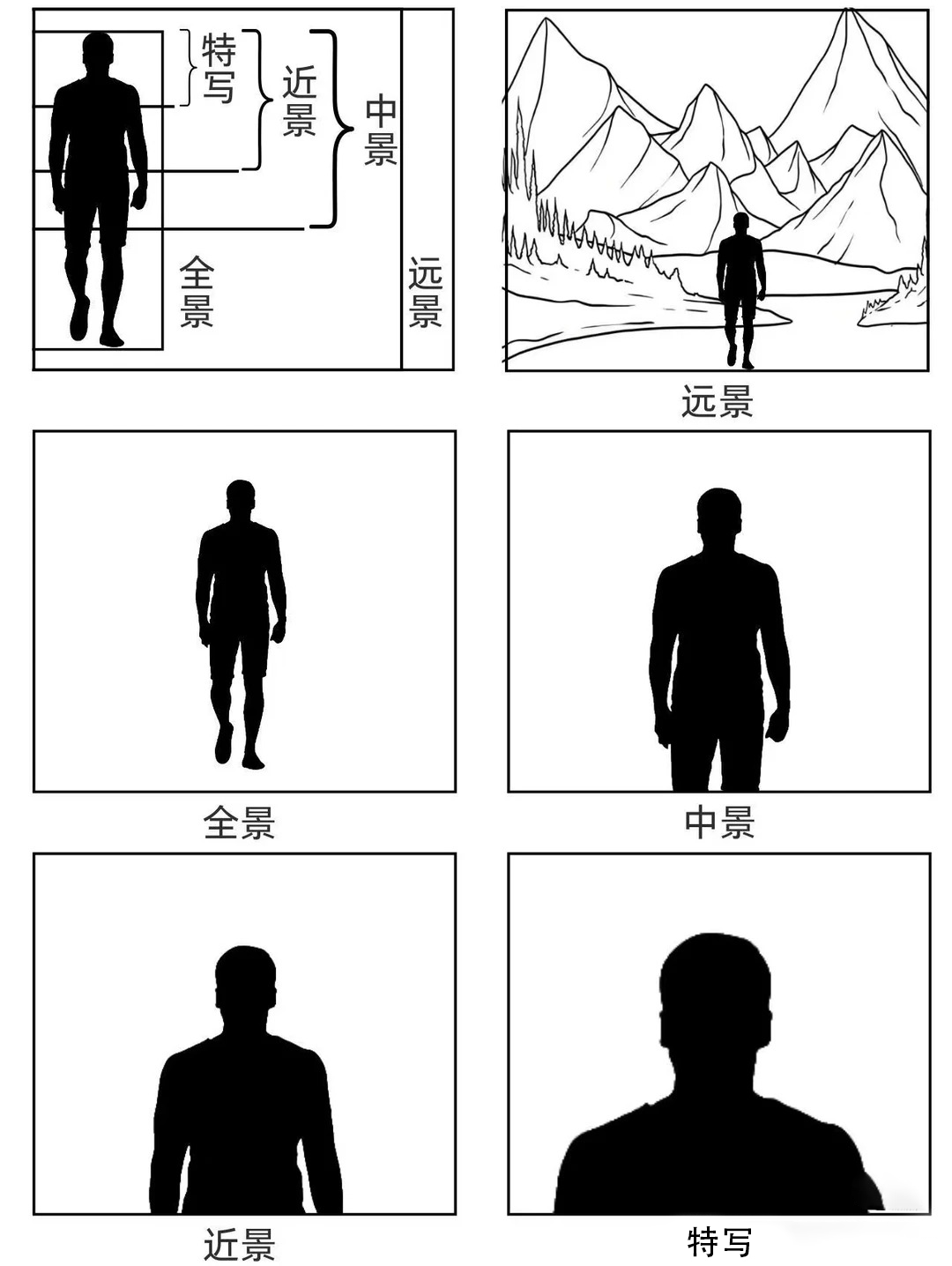
实战技巧:
前景(遮挡与窥视):
前景是建立真实感的第一道防线。它负责打破画面的完整性,制造“临场感”。
错误示范: Standing in a forest
进阶写法:
Blurred fern leaves in the immediate foreground(前景模糊的蕨类植物叶片),Out of focus rain droplets on the lens(镜头上失焦的雨滴)。
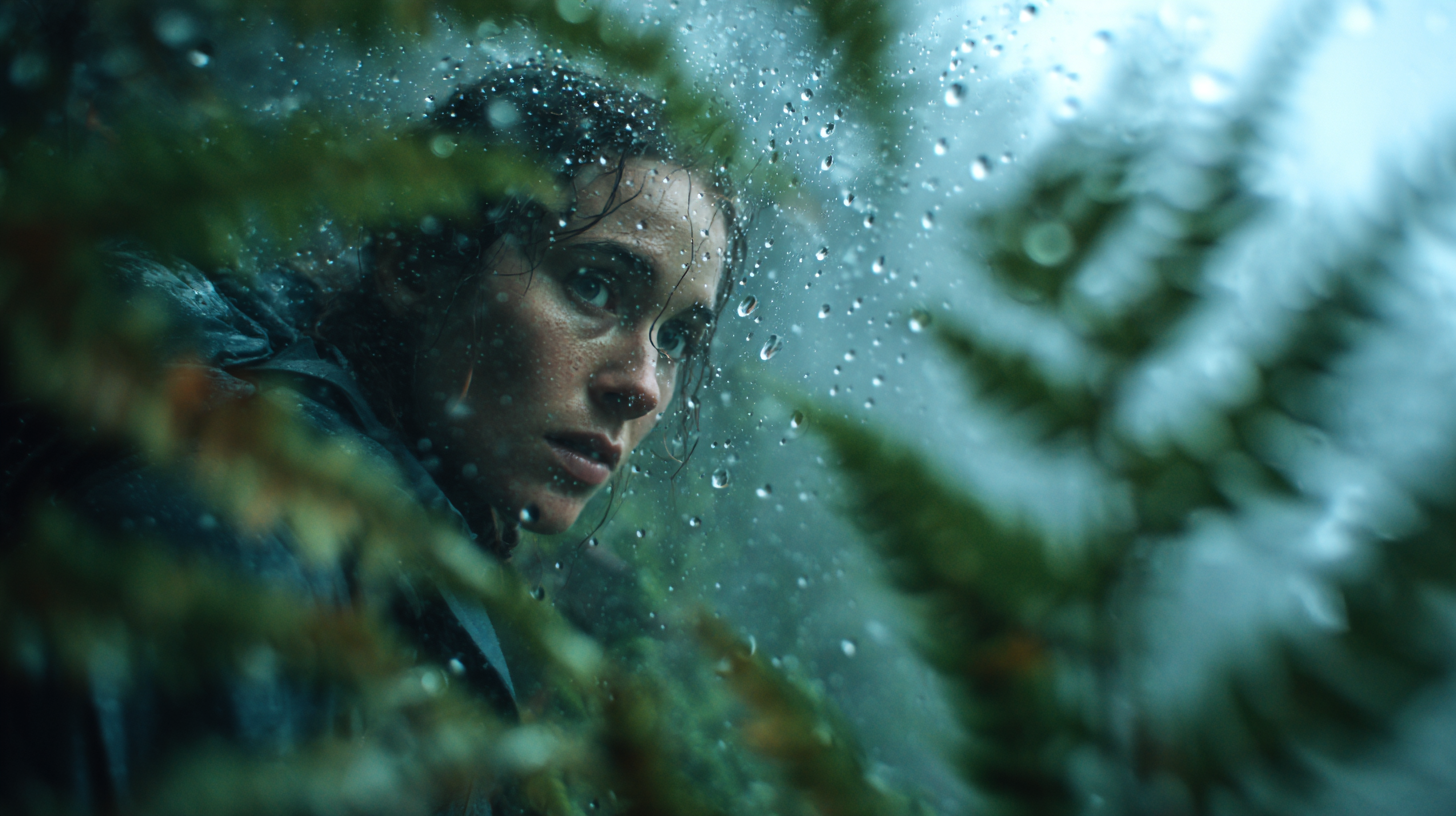
Prompt:The view is partially obstructed by an extreme close-up of blurred, rain-soaked fern fronds and large, out-of-focus water droplets clinging to the camera lens, creating a green atmospheric haze. Looking through this natural, out-of-focus frame, a lone female explorer is revealed emerging from the mist.
原理: 强迫AI渲染景深(Depth of Field),让视线穿过物体看到主体,增加三维体积感。
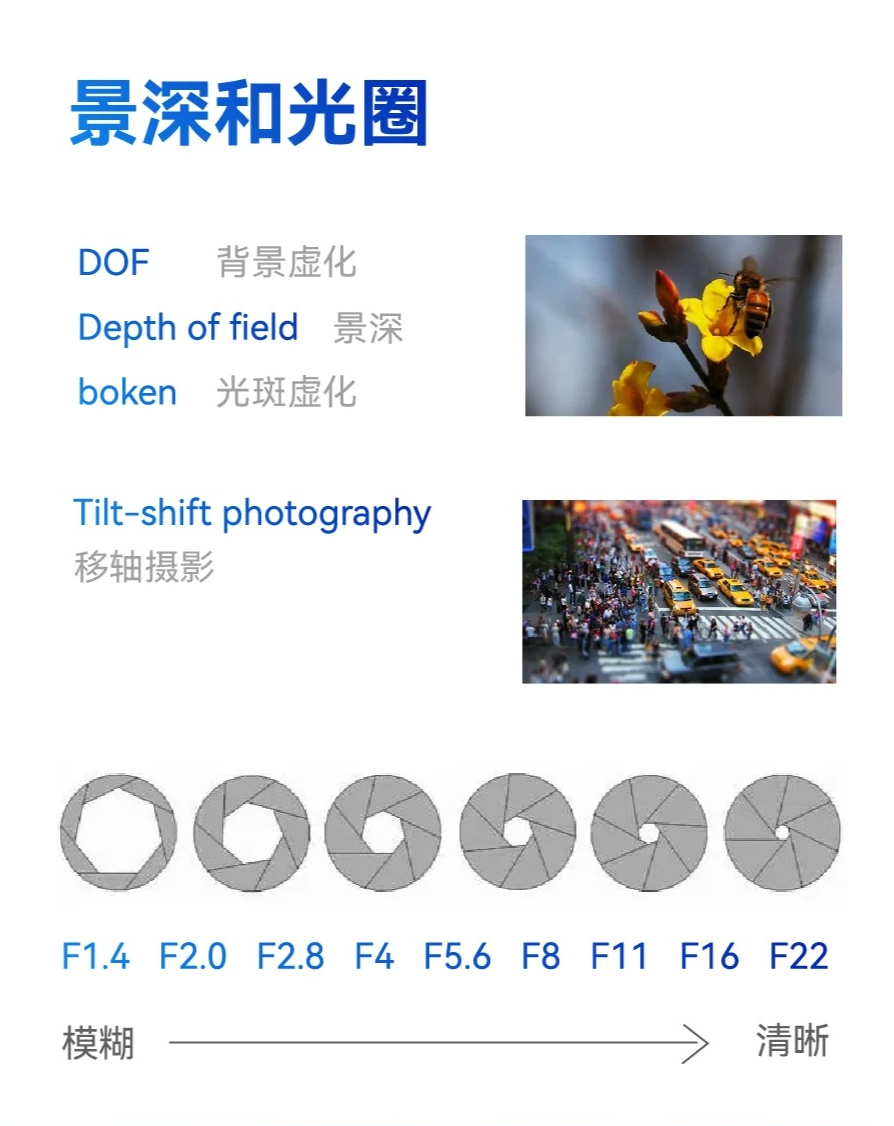
中景(交互与承载):
中景是主体所在的区域,重点在于主体与环境的接触。
进阶写法:
不要只写“人物站在地上”,要写 Boots sinking slightly into the mud(靴子轻微陷进泥里),Hand resting on a rough concrete wall(手靠在粗糙的混凝土墙上)。

Prompt:The main focus is on a hiker's heavy leather boots. The boots are visibly sinking slightly into the deep, saturated mud, showing weight and physical interaction with the terrain. A gloved hand rests firmly on a rough, moss-covered rock to the right.
原理: 建立物理接触点,锚定人物位置。
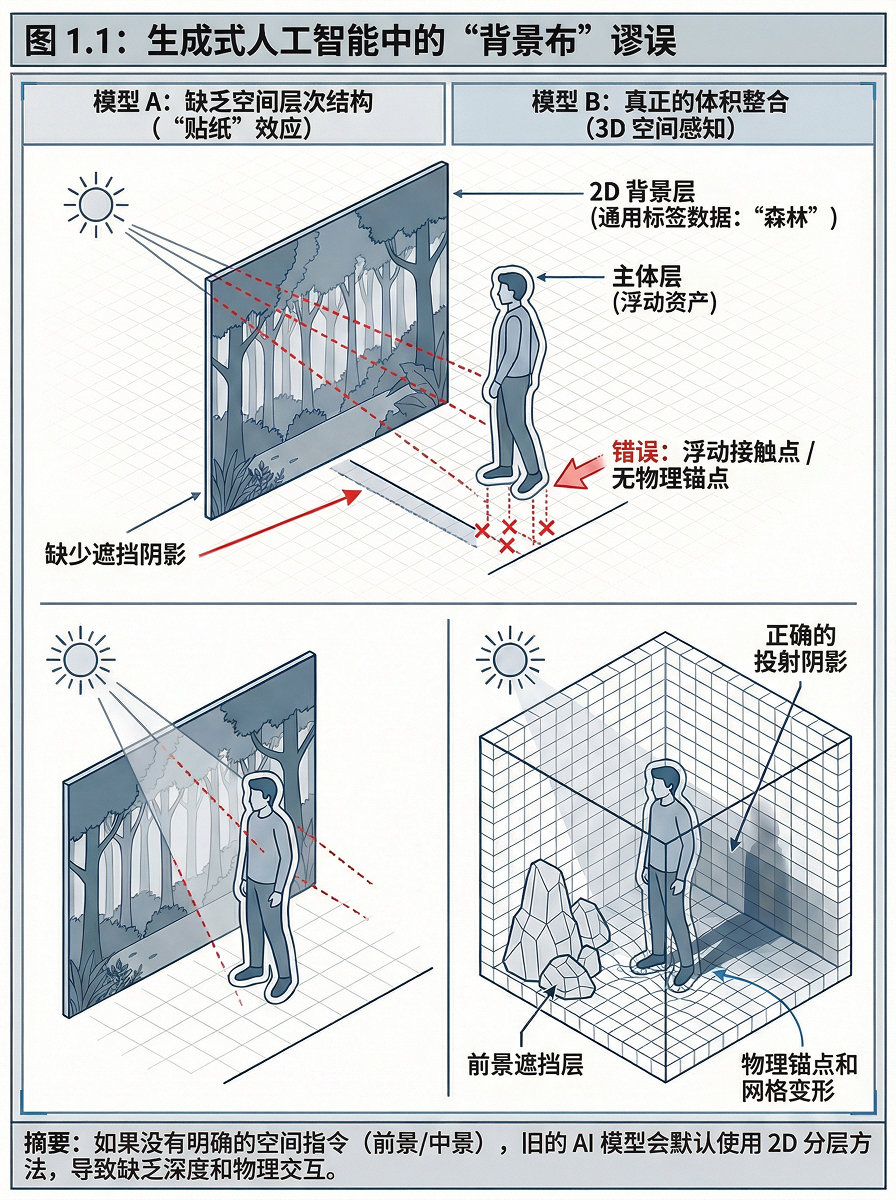
远景(延伸与氛围):
远景决定了世界的广度。
进阶写法:
Fading mountain silhouette in the atmospheric haze(大气雾霾中渐隐的山脉剪影),Distant city lights bokeh(远处城市的焦外光斑)。
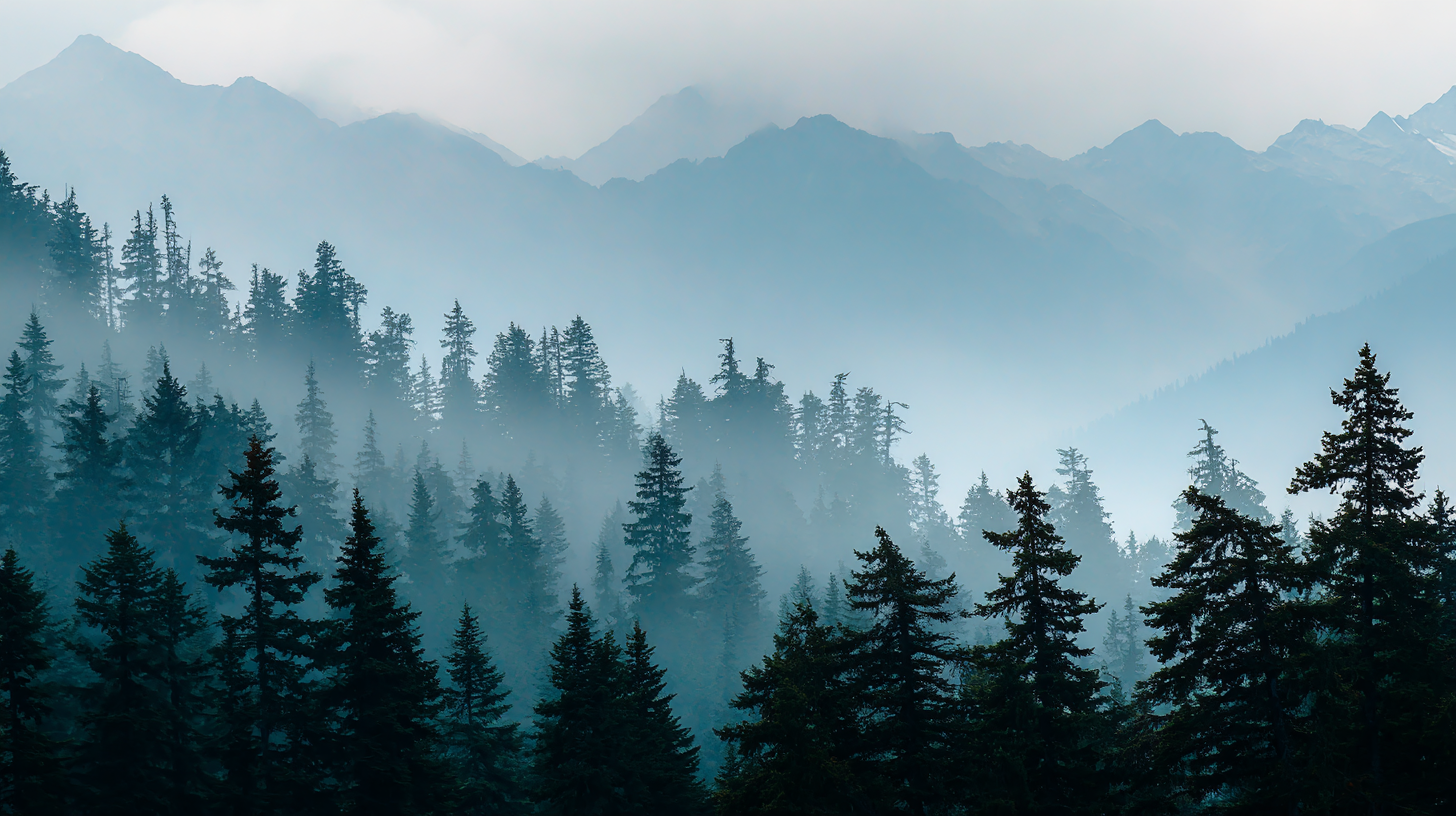
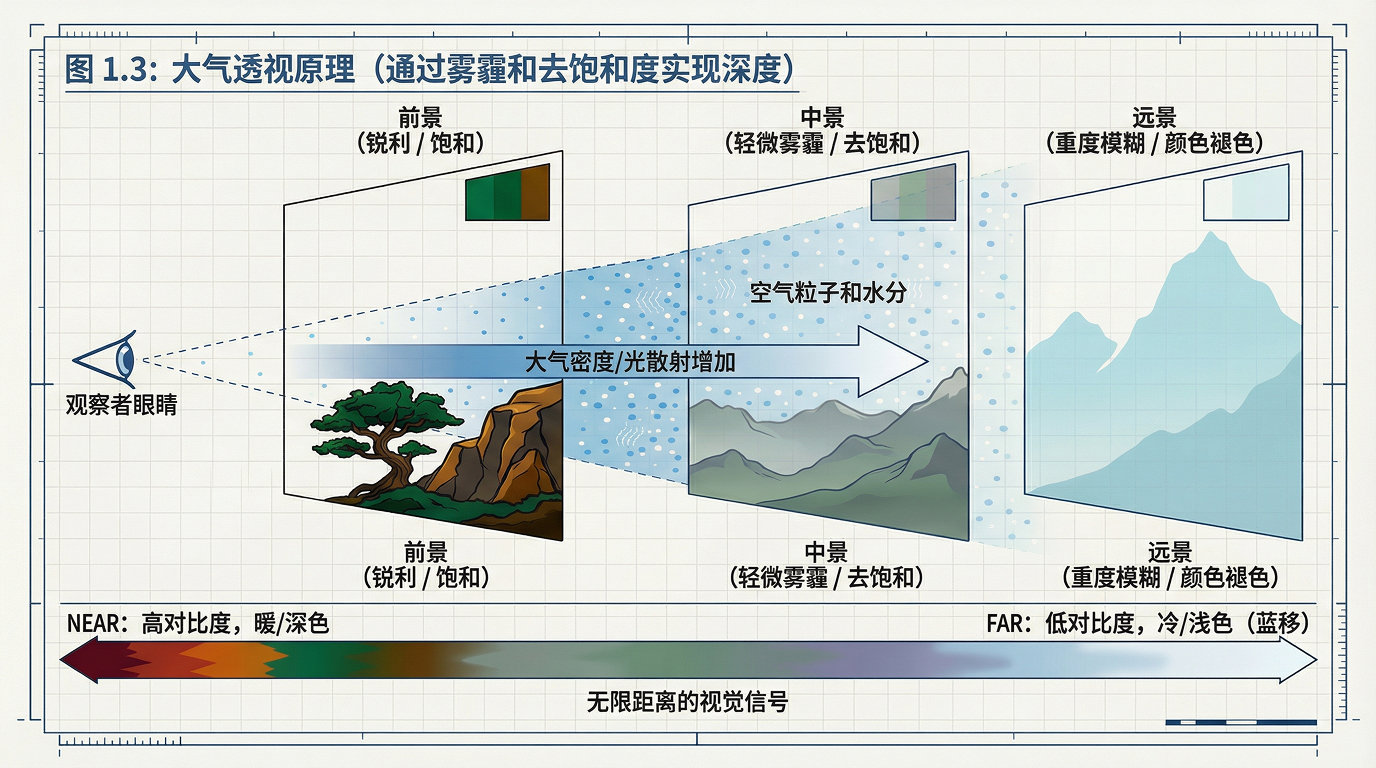
Prompt:Behind the subject, layers of towering pine trees fade progressively into thick, white atmospheric fog. The silhouette of a distant mountain range is barely visible in the haze, creating infinite spatial depth.
原理:通过描述远处的模糊和色彩减淡,能极大拉开空间距离。
3. 工具特实操
现在的AI工具支持更长的上下文理解。你可以尝试使用线性扫描法描述:
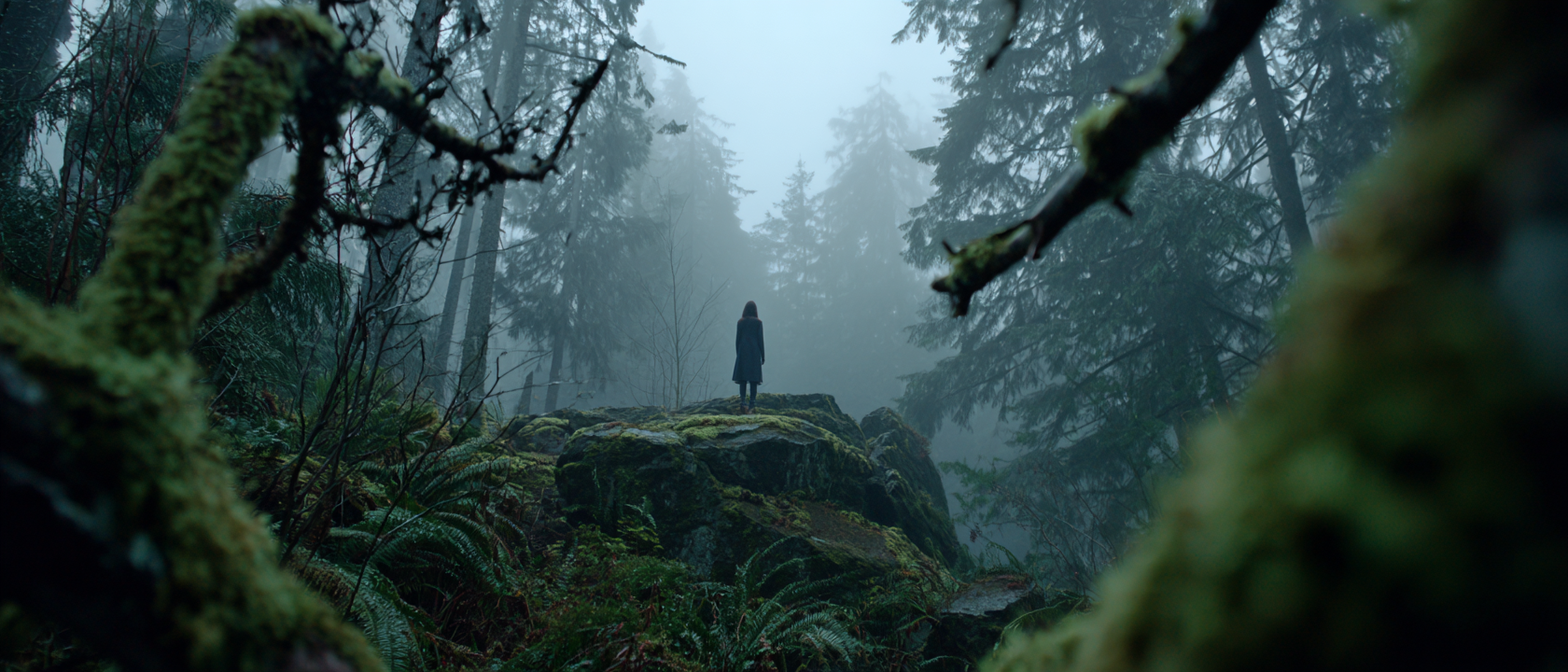
"The camera looks through wet tree branches (FG), focusing on a woman standing on a mossy rock (MG), with a deep, foggy forest stretching infinitely behind her (BG)." (镜头透过湿润的树枝,聚焦于站在长满苔藓岩石上的女人,身后是无限延伸的浓雾森林。)
方法二:植入因果逻辑,消除“拼贴感”
1. 名词堆砌的弊端
很多提示词看起来很丰富:“沙发、台灯、窗户、猫”。 但生成的画面往往是:沙发很完美,台灯很亮,窗户很通透——但它们之间没有任何关系。光没有照在沙发上,窗户的冷光也没有影响台灯的暖光。这就是典型的拼贴感。
2. 建立环境的逻辑链条
我们要告诉AI的是因果关系(Causality)。真实世界是有物理逻辑的:因为有光,所以有影;因为有遮挡,所以有暗部。
实战技巧:
光影因果:
普通写法:
Sunlight, wall
逻辑写法:
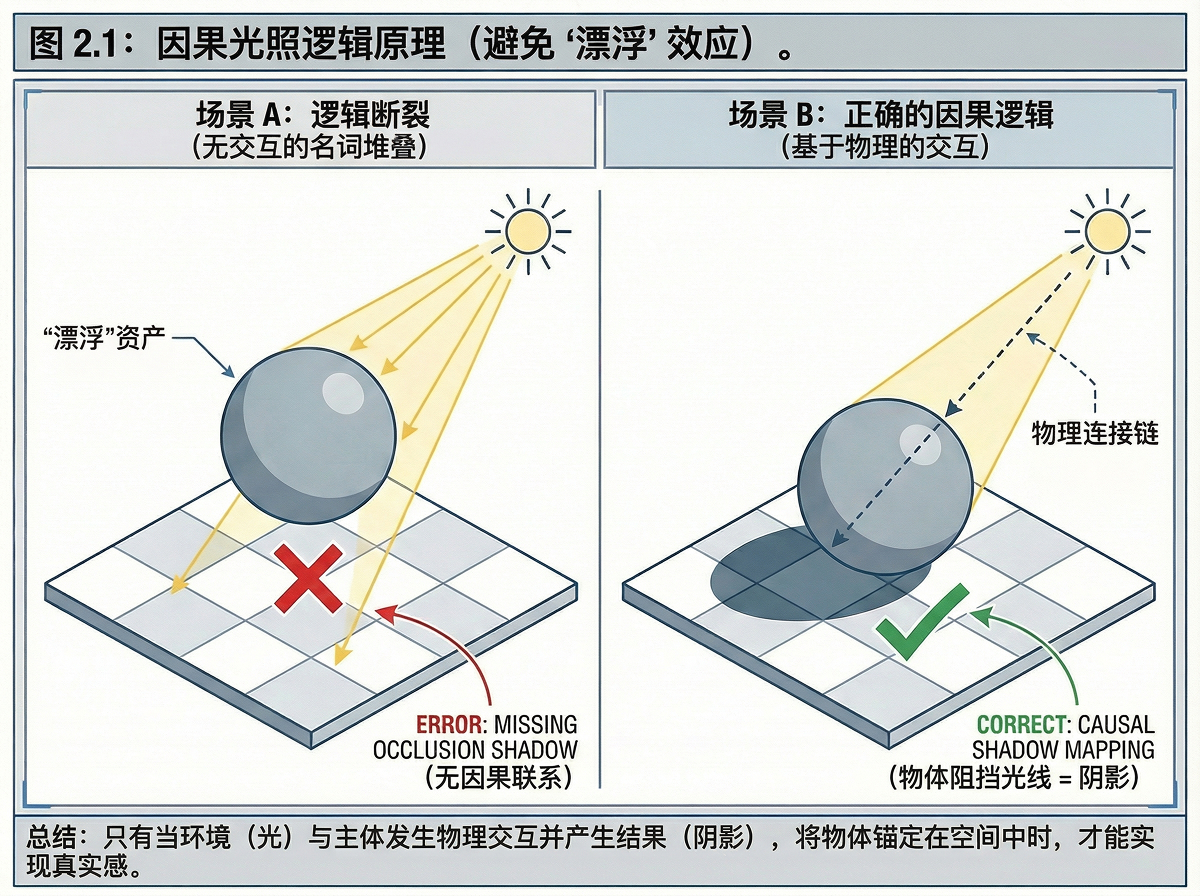
Harsh sunlight casting sharp shadows of the window frame onto the peeling wall(强烈的阳光将窗框的尖锐阴影投射在剥落的墙面上)。
解析: 这里不仅有物体,还有物体之间的相互作用。光线成为了连接窗户和墙壁的纽带
案例:
普通写法:
A beautiful woman sitting on a sofa, living room, sunlight, window, plants.
逻辑写法:
A cinematic shot of a woman sitting on a velvet sofa. Because large monstera plants are placed between the window and the sofa, they block the harsh afternoon sunlight, casting intricate, dappled shadows across the woman's face and the sofa cushions. The shadows follow the contour of her features.

材质因果:
普通写法:
Rainy street
逻辑写法:
Neon lights reflecting on the oily puddles on the asphalt(霓虹灯在沥青路面的油性水坑中反射)。
解析: 定义了材质(沥青、水、油)对光线(霓虹)的物理反馈。算法能完美还原这种物理属性,只要你提示到位。
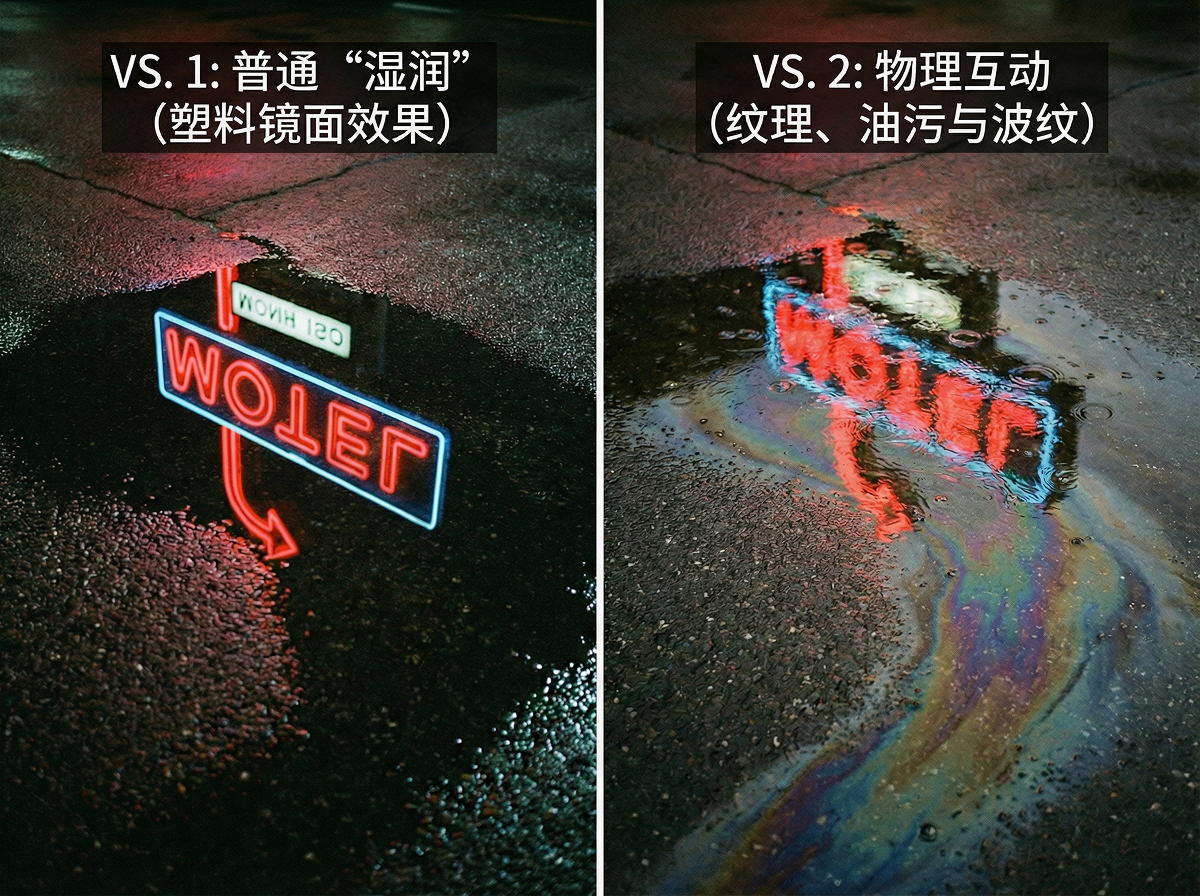
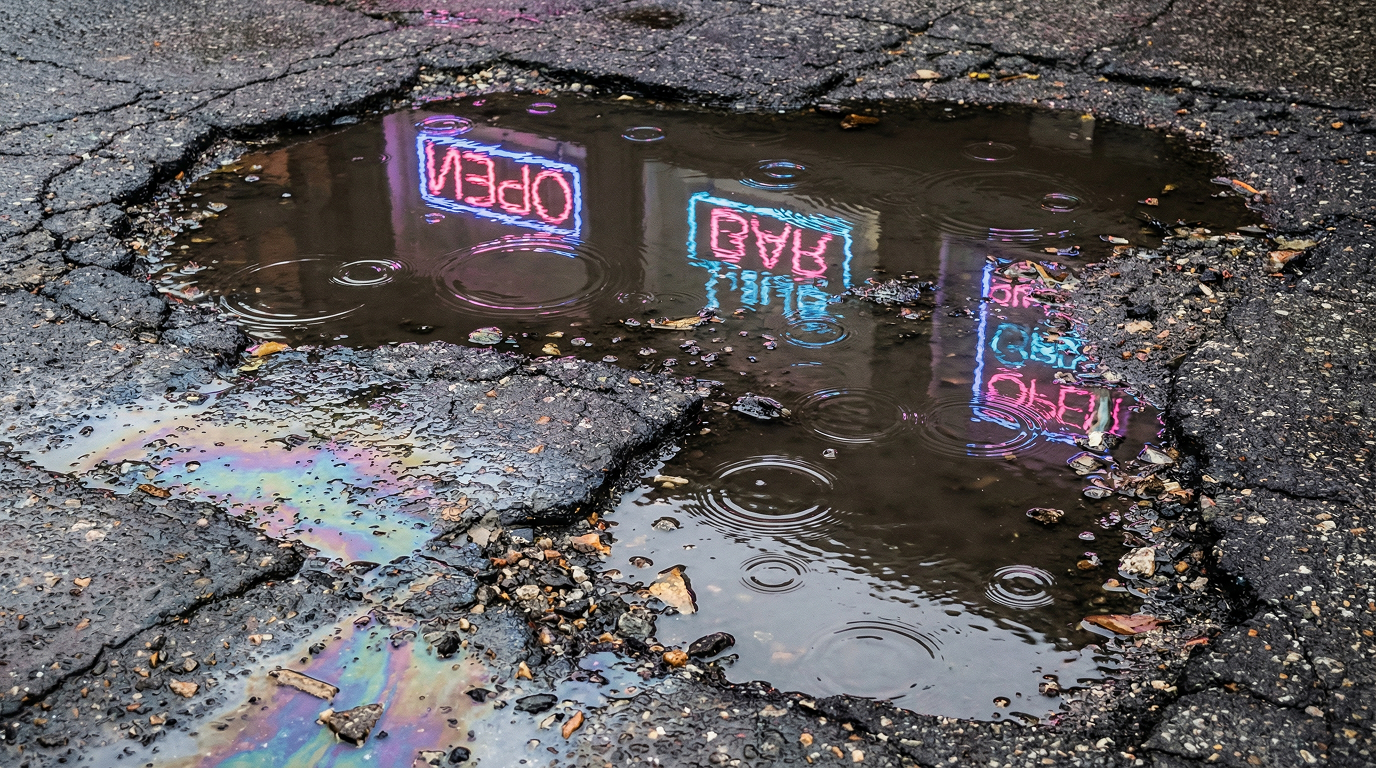
案例:
普通写法:Cyberpunk street, raining, neon lights, puddles on the ground.
逻辑写法:Close-up of the asphalt ground. Uneven potholes are filled with dirty rainwater mixed with oil. The pink and blue neon signs from the shops above are reflected in the puddles, but the reflection is distorted by the ripples caused by falling raindrops and the oily rainbow texture on the water surface.
时间痕迹因果:
环境应该体现时间的流逝。
逻辑写法:
Dust motes dancing in the shaft of light(尘埃在光束中飞舞),Rust running down from the metal bolts(铁锈顺着金属螺栓流下)。
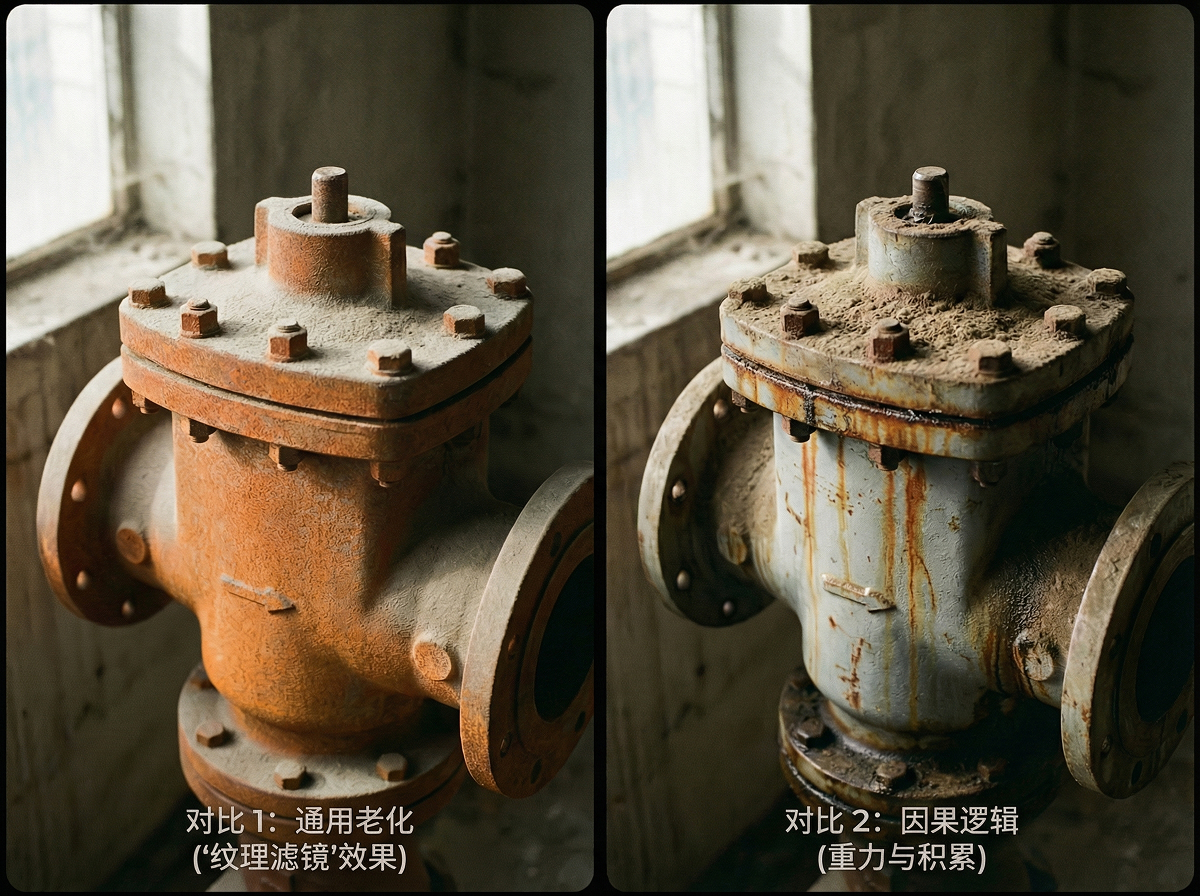
案例:
普通写法:Old robot, rusty metal, abandoned factory, dust.
逻辑写法:An abandoned robot in a factory. Due to years of water leakage from the ceiling, orange rust streaks have run down vertically from the metal bolts and joints, staining the white armor below. Thick dust has **accumulated** heavily on the top horizontal surfaces (shoulders and head), while vertical surfaces remain relatively clean.
3. 核心思维:用动词连接名词
在编写提示词时,多用动词和介词短语(casting, reflecting, blocking, filtering through)。
"Because the green plants block the main light source, dappled shadows fall on the character's face." (因为绿植遮挡了主光源,斑驳的阴影落在人物脸上。) 这种带有逻辑推导的描述,能激活AI模型中的物理模拟层,生成极具说服力的画面。
方法三:情绪与性格,光线与天气的深度控制
1. 光线决定情绪,天气决定性格
在高阶创作中,光线不仅仅是“亮或暗”,它是情绪的载体;天气不仅仅是“晴或雨”,它是环境的性格。 如果提示词中缺乏明确的光照条件,AI会自动补光。
这种“自动补光”通常是平淡的漫反射(Global Illumination),虽然清晰,但极其虚假,像影楼的廉价布景。
2. 光线的矢量化描述
现在的AI工具允许我们对光进行极其精准的控制。你需要描述光的强弱、方向、色温以及介质。
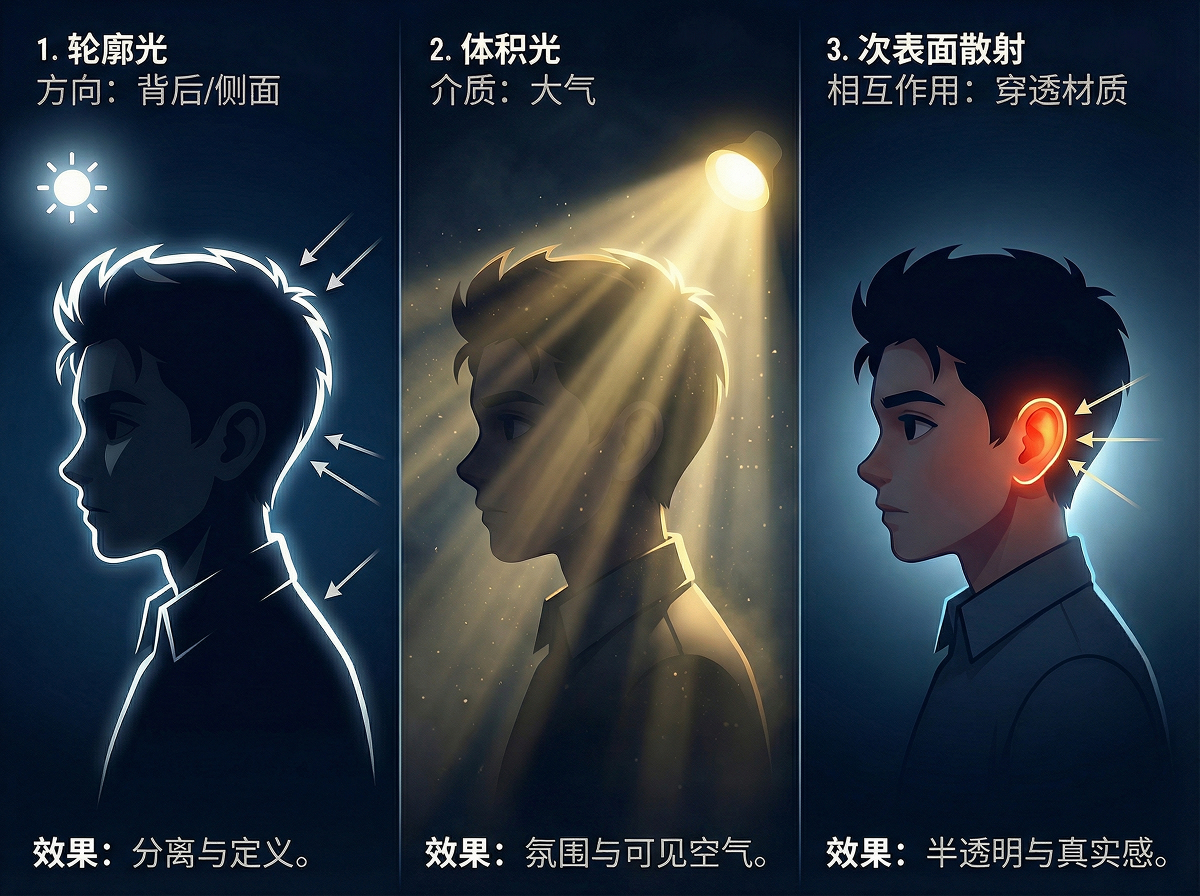
方向性(Directionality):
Rim lighting(轮廓光):勾勒边缘,将人物与环境剥离。
Volumetric lighting(体积光/丁达尔效应):增加空气感,让光“可见”。
Subsurface scattering(次表面散射):针对逆光下的人体或树叶,表现半透明的真实质感。
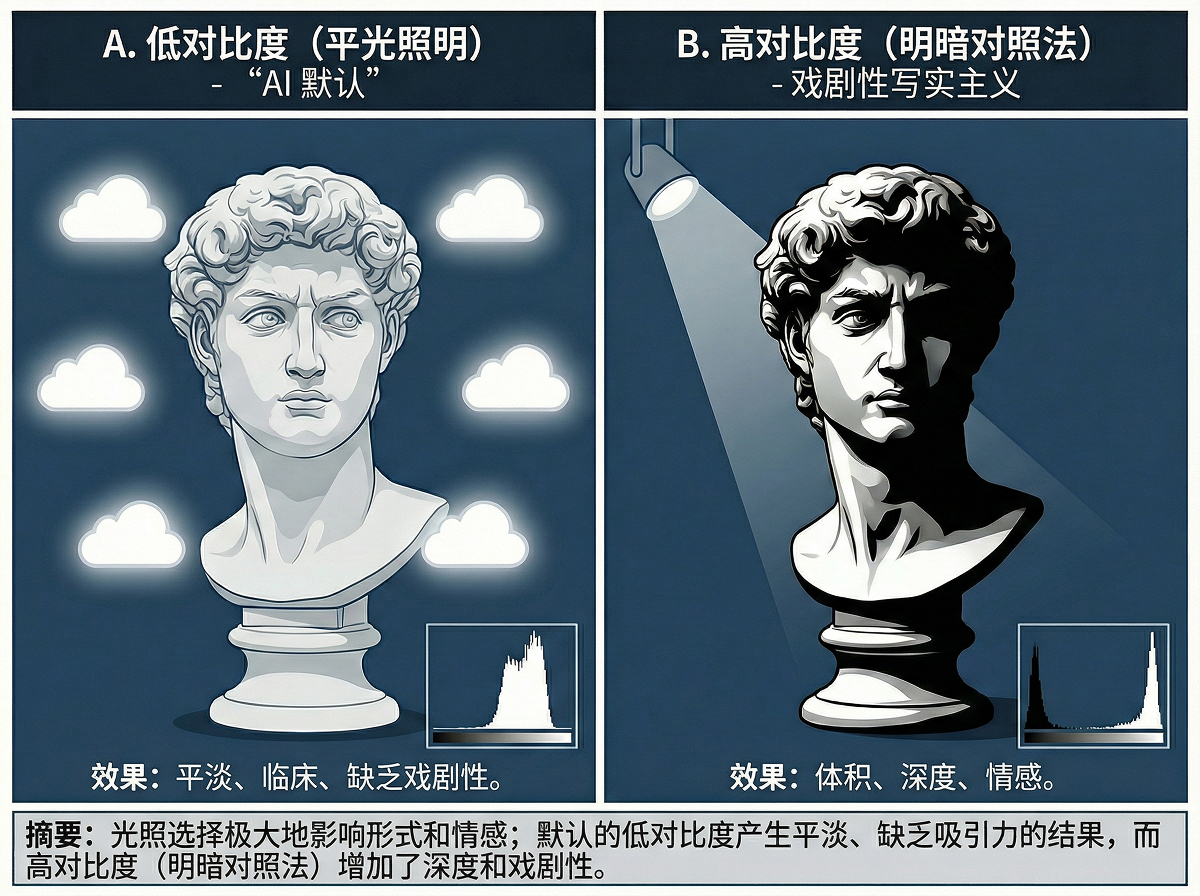
光比与反差(Contrast Ratio):
不要害怕黑暗。真实的画面往往有大面积的暗部。
尝试使用 Chiaroscuro(明暗以此法)或 Low key lighting(低调照明),迫使AI压暗背景,仅保留关键细节。
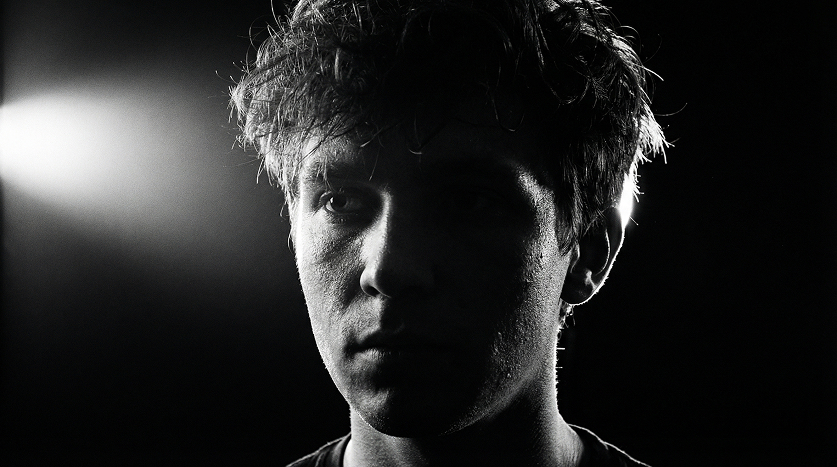
实操提示词:
Close-up portrait using Split Lighting technique. A single, harsh light source coming from the extreme left creates a high-contrast look. One side of the face is illuminated revealing skin pores and sweat, while the other side falls into pitch-black shadow. Rim light catches the edge of the ear and messy hair, separating the subject from the dark background.
(逻辑关键词: Split Lighting / Harsh light source / Pitch-black shadow / Rim light)
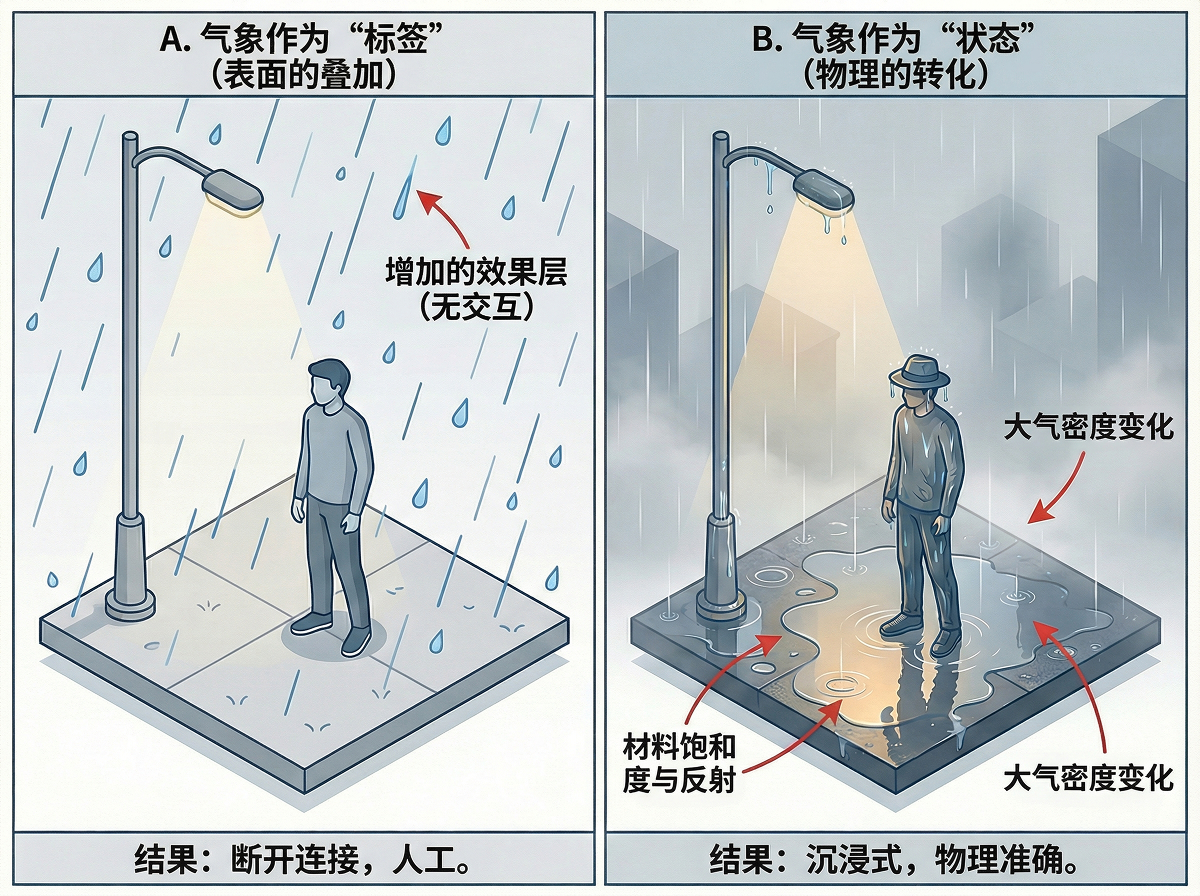
3. 天气作为环境状态
天气不应被视为附加信息(Tag),而应作为环境状态(State)的一部分进行描述。
不要只写“下雨(Raining)”:
要写雨水如何改变了环境:Mist rising from the warm ground(暖地面升起的薄雾),Clothes soaked and clinging to the body(衣服湿透并紧贴身体)。
不要只写“大风(Windy)”:
要写风的具象化:Trash flying in the turbulent air(垃圾在湍流的空气中飞舞),Hair whipped across the face violently(头发剧烈地抽打在脸上)。
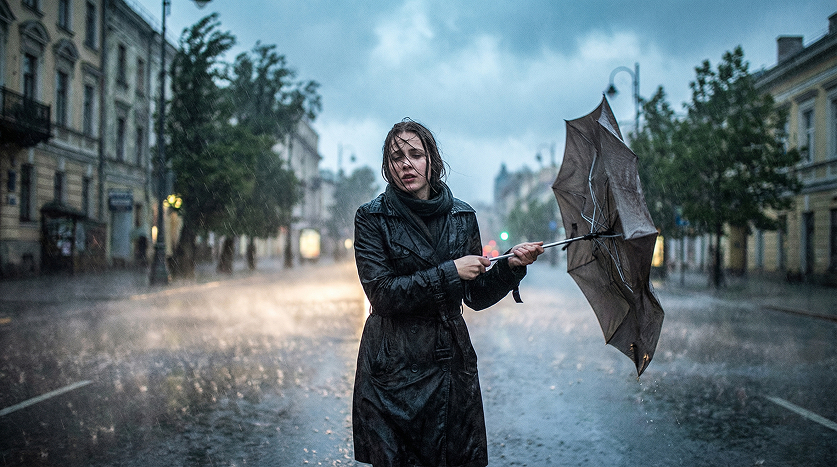
实操提示词:
A chaotic storm scene. The wind is violently whipping the girl's hair across her face, obscuring her vision. Her trench coat is flapping wildly in the turbulent air. The umbrella is inverted inside out by the gale force. Rain is not just lines, but dense mist exploding off the wet pavement. Clothes are visibly soaked, heavy, and clinging to her body.
(逻辑关键词: Violently whipping / Flapping wildly / Inverted / Exploding off / Soaked & Clinging)
4. 真实世界的美学悖论
最后,你要明白:真实世界不是为了“好看”而存在的。
很多AI新手喜欢用 Perfect lighting, clean composition。但在真实摄影中,环境往往是杂乱的、不完美的。
尝试加入“瑕疵词”:
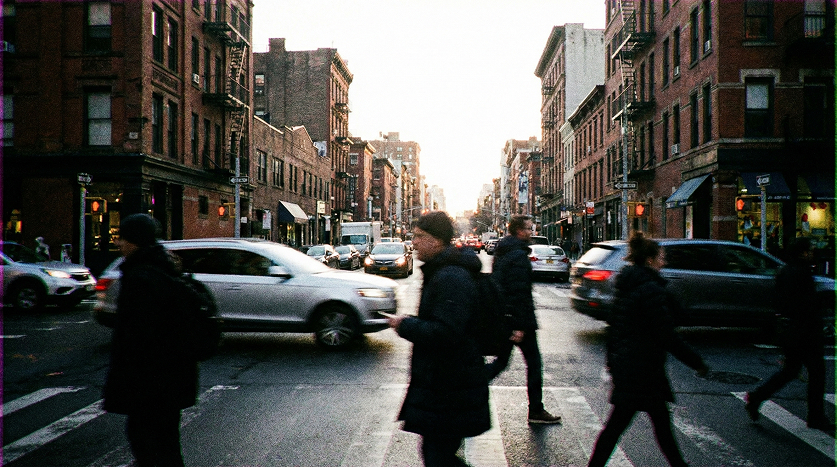
Overexposed sky(过曝的天空),Chromatic aberration(色差/紫边),Motion blur(动态模糊),Grainy film texture(胶片颗粒感)。
这些瑕疵恰恰是人脑判断“这是一张照片而非CG”的关键信号。
结语:环境决定世界的可信度
总结今天的课程,我们不再把环境视为一种“填充物”。
1.空间层次解决了平面的假象。
2.逻辑关系解决了元素的割裂。
3.光影天气赋予了画面呼吸感。
即使画面中没有人物,一个优秀的环境本身也应该“说得通”。它有结构(Structure),有因果(Causality),有状态(State)。环境不是配角,它是你创造的这个虚拟世界能否被观众相信的基石。
现在,打开你的AI工具,忘掉那些华丽的修饰词,开始构建一个真实的世界吧。
提示词结构执行卡
把这节课压缩成一张可执行卡片:看重点、照步骤、避坑,再复制模板直接开做。
这节课的重点不是堆形容词,而是围绕「环境决定真实:打破AI绘图的“塑料感”魔咒」把提示词写成能执行、能复用、能检查的结构。
按原文节奏走最稳:先吃透「方法一:拒绝“概括式”描述,构建空间层次」,再把「方法二:植入因果逻辑,消除“拼贴感”」定住,接着处理「方法三:情绪与性格,光线与天气的深度控制」;最后用「结语:环境决定世界的可信度」收口。
- 先把「方法一:拒绝“概括式”描述,构建空间层次」里的变量写全。
- 这一段别堆词,先把作用分清。
- 按「方法三:情绪与性格,光线与天气的深度控制」去统一气质,不要只改表面。
- 先把「结语:环境决定世界的可信度」里的变量写全。
不要只堆形容词;提示词要写清主体、场景、镜头、光线、动作、限制条件和验收标准。
检查提示词是否有清晰主体;是否说明画面关系;是否有可执行动作;是否包含避免跑偏的限制条件。
请围绕「环境决定真实:打破AI绘图的“塑料感”魔咒」帮我做一个可直接执行的方案。
我的目标是:【填写你的具体目标】
我的素材/产品/角色信息是:【填写已有素材和限制】

请输出:提示词结构拆解、中文提示词、英文提示词、负面限制词、生成后修改建议和自检清单。要求每个词都有明确作用。